Anti-Aircraft Artillery Training Centers on Cape Cod
After WWI, coastal weapons were being replaced with new technology and more powerful weaponry. The military began installing large 16-inch high-elevation coastal guns capable of hitting targets 26 miles away. New 6-inch two-gun barbette carriage batteries were installed in 70 locations.[1] The 40-millimeter automatic cannon replaced the 50-caliber machine gun, and the 90-millimeter tank gun replaced the 3-inch guns at coastal sites. Devices like range correction boards were used in plotting rooms to calculate range and gun data [2]. By 1940, radar had become a new and important tool for early enemy detection.
These new weapons and devices required advanced use of mathematics to determine precision, logistics, accuracy, and timing. New tactics and new training protocols were needed. The military recognized it needed more officers and enlisted men to man these new systems. In 1942, the specialized Anti-Aircraft Artillery Training Centers (AAATC) were established.
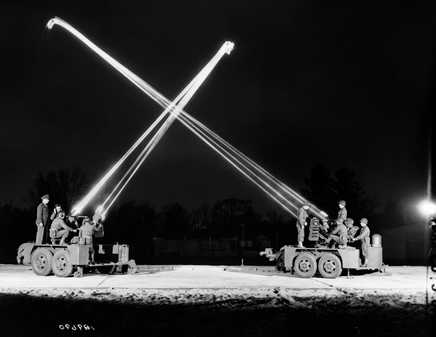
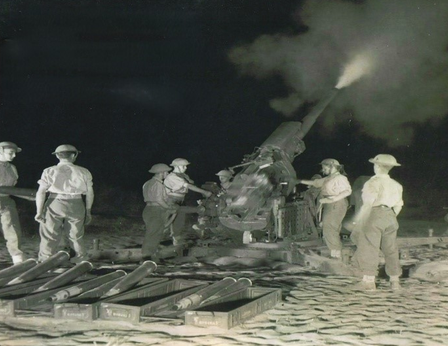
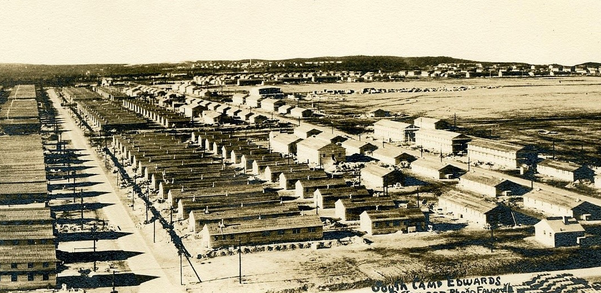
Camp Edwards AAAT;Seven AAA training centers were created. Camp Edwards was chosen to house one of the first training centers and was activated in March 1942. It quickly became the U.S. Army’s premier training center because of its rigorous and intensive program. [3] The training included several components: officers and enlisted men had to navigate grueling obstacle courses to ensure combat readiness, practice intensive tactical skills such as firing anti-aircraft guns at distant targets with live ammunition, and detect enemy aircraft at night.
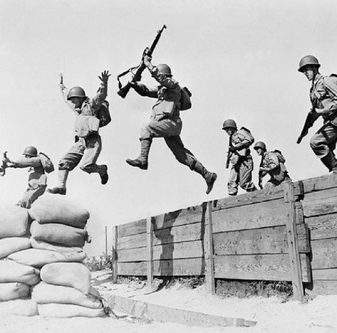
AAA training course at Camp Edwards
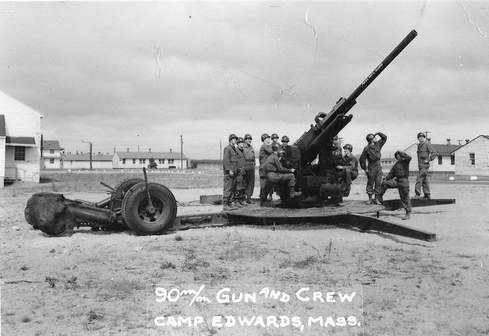
Gun and Crew Camp Edwards, Mass
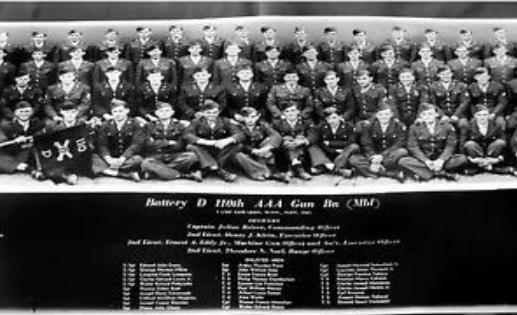
Group picture of Battery D 110th AAA Gun Brigade
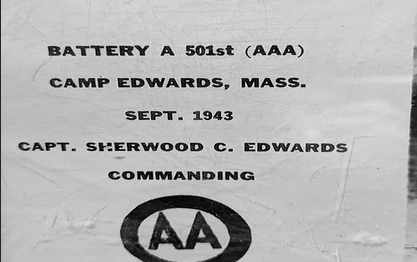
Banner from 501st
AAA gun crew practicing night detection
Camp Edwards had several firing ranges, including the Popponesset Firing Range in Mashpee and the Scorton Neck Firing Range Center. In over two years, the Camp Edwards AAA Center trained 42 anti-aircraft battalions.
Night Shooting at Scorton Creek Sandwich 1943
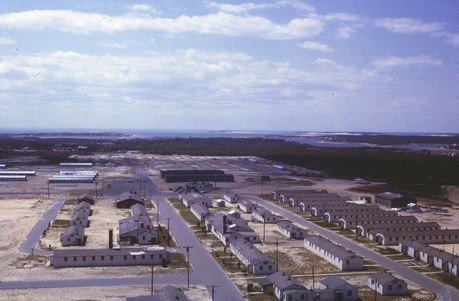
Camp Wellfleet AAATC
In addition, the Army leased a 1,738 -acre property in Wellfleet for another anti-aircraft artillery training base. Camp Wellfleet was used by the Army from 1942 until June of 1944. The Navy took over the base in 1945 and used it as a mobile radar training school supporting the Navy night fighter training school based in Rhode Island. [4]
The camp housed over 1,000 men, including 64 officers, and contained over 30 barracks and buildings on site. In 1943, it was possibly the “nation’s largest facility of its kind.” [5] Camp Wellfleet had access to four miles of coastline, a two-mile firing line, and a one -mile heavy wood area for field maneuvers. [5}
*Camp Wellfleet photo credit David Crary Jr. in Provincetown Independent
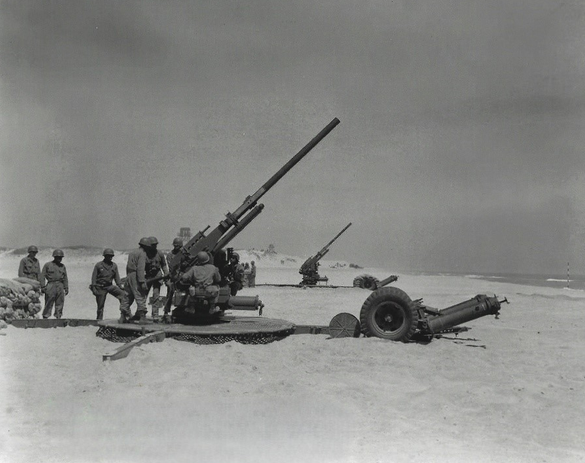
90 MM AAA Gun and Crew Camp Wellfleet
“Because of the large unoccupied coastal shoreline, the soldiers were able to practice shooting targets mounted on rafts moored in the ocean…In addition to ground and floating water targets, Camp Wellfleet had remote-controlled drones that would take off from a tiny airstrip on top of the bluffs,[6] And, there were also large canvas targets towed in aircraft piloted by Women Air Force Service Pilots (WASP) pilots. These pilots bravely flew these targets so anti-aircraft gun crews could fire live ammunition at moving targets. [7]
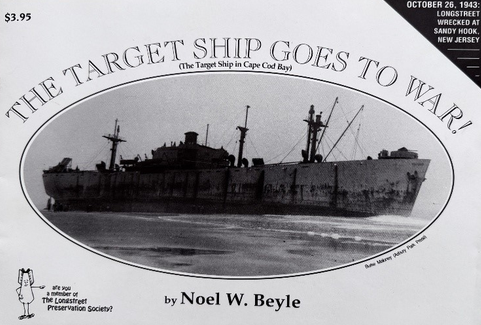
Cape Cod Target Ship
The SS James Longstreet was a Liberty ship built in 1942. The ship suffered hull damage in a storm in New Jersey in 1943. The U.S. Navy decided to use the James Longstreet as a target ship in 1944. It was painted chrome yellow, towed to a secret location, and used in secret experiments involving air-to-surface guided missile systems. The Navy decided it could still use the ship for target practice at Cape Cod in 1945. It was towed to Cape Cod Bay and anchored less than 4 miles off the coast of Eastham. It could be easily seen from the beach, and the Navy continued to use the SS James Longstreet as a target ship for nearly 30 years. It stayed visible until about 2003 when it disappeared in a storm. [7]
An Interesting Side Story
In the 1960s and 1970s, families from Eastham down to Wellfleet would go to the bay beaches to watch the Navy do its best at targeting the SS. James Longstreet. With the sound of what some of the beach watchers described as supersonic booms, Navy pilots would fly their fighter planes over the old WWII ship and drop a series of bombs to gauge accuracy. [8]
The SS. James Longstreet was such a popular attraction along the Cape Cod beach that there was a Long Street Preservation Society formed by a local historian, Noel W. Beyle, to promote the story of the target ship in the bay. He wrote a series books on the target ship. The James Longstreet target ship in Eastham.
Picture of Noel W. Beyle’s book The Target Ship Goes to War